

Mulching Techniques to Keep Trees Healthy and Moist
Why Mulch Matters for British Trees
If there is one job in the garden that offers the greatest reward for the least effort, it is mulching. A generous layer of organic material spread around the base of a tree mimics what happens naturally on a woodland floor, where fallen leaves, twigs and decaying bark slowly break down into a dark, crumbly layer of leaf mould. That natural blanket does three things remarkably well: it holds moisture in the soil, it keeps competing plants at bay, and it feeds the soil life that feeds the tree.
In the UK our rainfall is famously unreliable in the wrong way. We can have a sodden March followed by a bone-dry June, and clay soils in particular swing from waterlogged to cracked and hard within weeks. Mulching buffers that swing. It slows evaporation from the surface, keeps root-zone temperatures steadier through frost and heat, and gives earthworms and fungi the conditions they need to build structure. For established trees, shrubs and hedges, it is the single most useful piece of seasonal care you can give.
Choosing the Right Material
Not all mulches behave the same way, and the best choice depends on what you are trying to achieve and what you have to hand.
- Well-rotted bark is the classic tree mulch. It knits together into a stable layer, lasts two to three years and looks tidy around ornamental planting.
- Composted green waste is widely available and inexpensive. Choose a soil-association-approved or peat-free blend and check it does not smell sour or contain visible plastic.
- Leaf mould is the gold standard for woodland gardens. Two years in a bin or wire frame turns autumn leaves into a soft, sweet-smelling material that improves soil structure beautifully.
- Woodchip from prunings is ideal for paths, wilder areas and around established trees. Fresh chip can temporarily lock up nitrogen at the surface, so keep it away from young, hungry plants or compost it for a few months first.
- Compost or well-rotted manure is better dug lightly into the soil than left as a thick surface cap, as it can form a crust that sheds water.
Whatever you use, aim for a material that is dark, crumbly and free from weed seeds. If in doubt, spread a handful on a tray, water it and see what germinates.
How to Apply Mulch Properly
Technique matters more than quantity. The most common mistake is piling mulch right up against the trunk, sometimes called a mulch volcano. This keeps the bark permanently damp, encourages fungal rot, and can shelter voles and mice that gnaw the base of the tree through winter.
Instead, spread the material in a wide, even ring that starts a hand's width away from the trunk and extends out to the drip line, or ideally beyond it. Roots spread far wider than most people imagine, so a broad circle of two to three metres around a mature tree is far more valuable than a shallow saucer at its foot.
- Depth: 5–8 cm for most materials, and no more than 10 cm even for coarse woodchip.
- Width: as wide as you can manage, extending past the canopy where space allows.
- Timing: early spring is ideal, while the soil is moist and before weeds get going. A second light top-up in autumn helps insulate roots before hard frosts.
- Preparation: water thoroughly first if the soil is dry, and clear perennial weeds such as couch grass, bindweed or ground elder before you cover anything.
If you are mulching around shrubs in a border, work around the crowns rather than over them. Small herbaceous plants and alpines dislike being smothered and will sulk or rot.
Mulching in Woodland and Wildlife Gardens
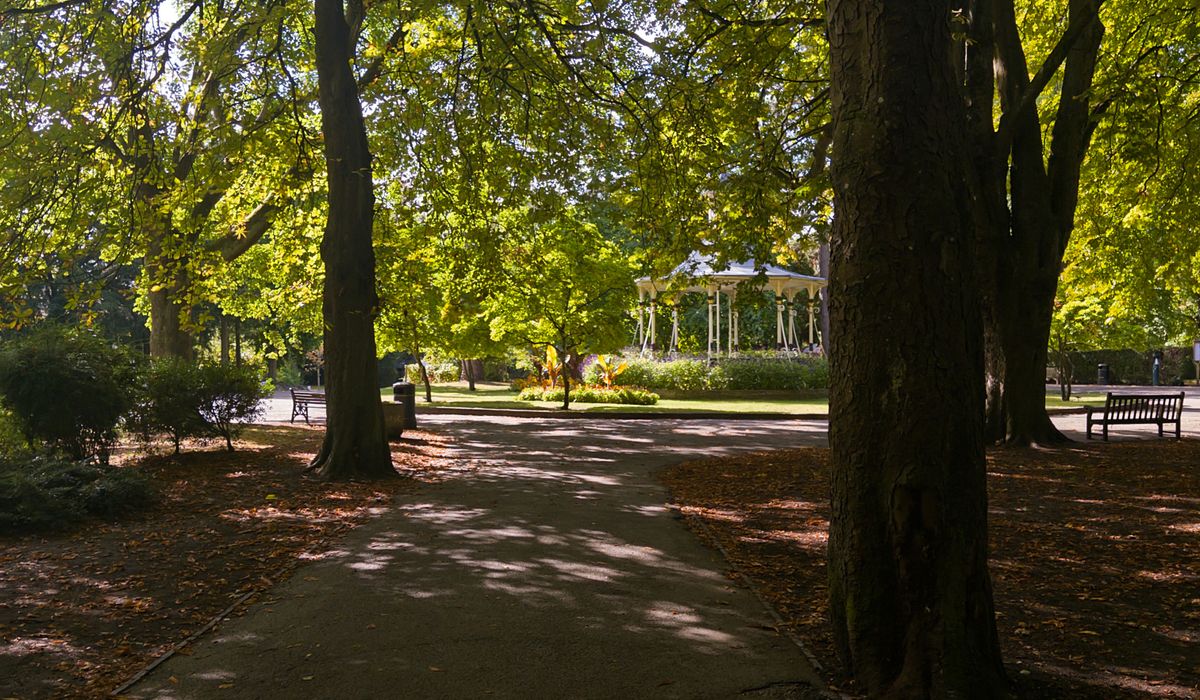
In a woodland-style garden, mulch becomes part of a living system rather than a one-off task. Allow leaves to lie where they fall beneath birch, oak, beech and hazel, and rake them into rings around the trunks rather than burning or bagging them. This leaf litter is habitat for beetles, hedgehogs and overwintering insects, and it slowly builds the humus-rich soil that woodland plants such as hellebores, anemones and wood anemone types adore.
Where you have acid-loving trees and shrubs, pine, spruce and larch needles make an excellent, gently acidifying mulch. Around fruit trees, a ring of compost topped with woodchip discourages grass competition and keeps the trunk area clean, which reduces the risk of canker and other problems in wet British winters.
Common Mistakes to Avoid
A few small errors undo a lot of good work. Do not mulch over plastic sheeting unless you are tackling something truly stubborn, as it starves the soil of air and water. Do not use fresh grass clippings in thick layers, as they heat up, smell and form an impermeable mat. Avoid mulching dry soil and hoping rain will soak through; water first, then cover. And do not top up year after year without checking depth, as mulch can build up to a smothering layer surprisingly quickly.
Get the technique right, and your trees will repay you with steadier growth, fewer droughts to worry about and a soil beneath them that is dark, alive and full of worms. It is honest, low-cost woodland gardening at its best.


Tree Care
-
Explore ways to improve aeration and drainage for tree roots in paved areas, helping urban trees thrive despite challenging ground conditions.
Planting



-

Long established fact that a reader will be distracted
-

Long established fact that a reader will be distracted
-

Long established fact that a reader will be distracted


Woodland
Karla Gleichauf
12 May 2017 at 05:28 pm
On the other hand, we denounce with righteous indignation and dislike men who are so beguiled and demoralized by the charms of pleasure of the moment
M Shyamalan
12 May 2017 at 05:28 pm
On the other hand, we denounce with righteous indignation and dislike men who are so beguiled and demoralized by the charms of pleasure of the moment
Liz Montano
12 May 2017 at 05:28 pm
On the other hand, we denounce with righteous indignation and dislike men who are so beguiled and demoralized by the charms of pleasure of the moment