

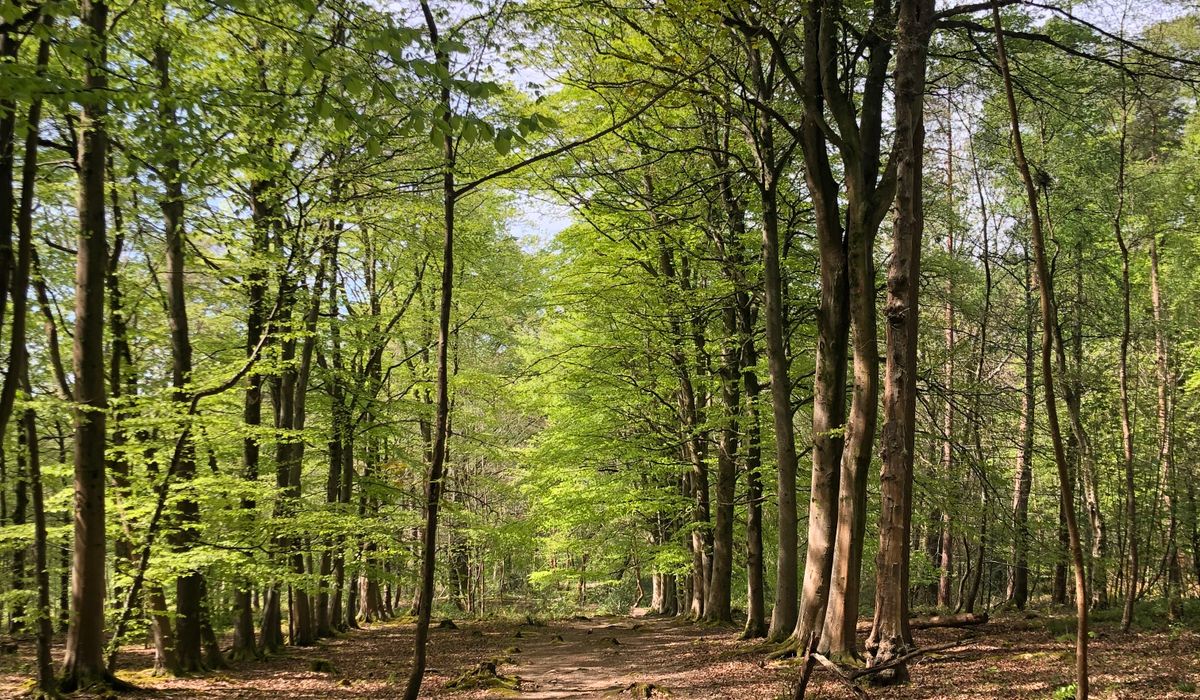
A Guide to Identifying Native British Woodland Trees
Why learn a tree by its leaves, bark and buds?
A woodland in midsummer can feel like a crowded room: every tree is green, every canopy is closed, and identification can seem daunting. But native British trees give themselves away in quieter ways. Learn to read leaf shape, bark texture and buds, and you can name most common species on a winter walk, a spring stroll or a summer ramble. The trick is to use several clues at once, rather than relying on a single feature. A leaf alone can be misleading; a bud, a twig and a patch of bark together tell a much more reliable story.
Leaves: shape, edge and arrangement
Begin with the leaf, but ask three questions: what shape is it, what is its edge like, and how are the leaves arranged on the twig? Arrangement is especially useful because it splits many trees into two simple groups. Opposite leaves sit in pairs at the same point on the twig, as in ash and field maple. Alternate leaves zigzag along the stem, as in oak, beech, birch and hazel.
Then look at the outline. An oak leaf is lobed with rounded edges, though the exact depth of lobes varies. Beech leaves are oval, glossy and edged with soft silky hairs when young. Birch leaves are roughly triangular with a pointed tip and double-toothed margins. Hazel leaves are almost round, with a heart-shaped base and a hairy, saw-toothed edge. Ash leaves are pinnate, meaning several leaflets run along a central stalk, and they are arranged opposite each other. Rowan also has pinnate leaves, but its leaflets are more sharply toothed and the whole leaf is often smaller.
- Oak: lobed, alternate, often with clusters of buds at the tips.
- Ash: opposite, pinnate, with black velvety buds in winter.
- Beech: oval, alternate, with a wavy, silky edge and coppery winter leaves.
- Birch: triangular, alternate, with double-toothed edges.
- Hazel: round, alternate, with a hairy, saw-toothed edge.
Bark: texture, colour and pattern
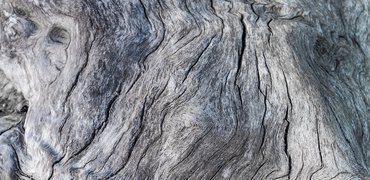
Bark changes with age, so compare trees of a similar size. Young birch is often smooth and reddish-brown before it turns the familiar papery white, peeling in horizontal strips. Beech bark stays smooth and grey, often with a faint elephant-skin texture, and it rarely has deep fissures. Oak bark is grey-brown and deeply ridged, with vertical fissures and a rugged, blocky feel on mature trees. Ash bark is smooth and grey on young trees, developing diamond-shaped ridges and fissures with age. Hazel is usually multi-stemmed with smooth, shiny brown bark, while hawthorn has a twisted, grey-brown trunk and, of course, thorns.
Look also at the base of the tree. Alder often has a fluted trunk and dark, fissured bark near water. Willow bark is grey-brown and deeply fissured on old trees, but the young twigs are flexible and often brightly coloured. Field maple has pale grey bark that becomes shallowly fissured, and young branches may carry corky ridges or wings.
Buds and twigs: the winter giveaway
In winter, buds become the most dependable clue. Use a hand lens if you have one. Check whether buds are opposite or alternate, how they sit against the twig, and what colour and texture they have. Ash has distinctive sooty-black buds, often described as velvety, and they sit opposite each other. Oak buds are brown, blunt and clustered at the twig tips. Beech buds are long, slender, sharp-pointed and arranged alternately, like little cigars. Birch buds are small, pointed and often sticky, with several scales. Hazel buds are rounded, green-brown and slightly hairy, and male catkins may already be visible as lambs' tails. Rowan buds are purple-brown and pointed, often with a few white hairs at the edge of the scales. Willow buds are pressed close to the twig and covered by a single cap-like scale.
- Opposite buds: ash and field maple.
- Alternate buds: oak, beech, birch, hazel, rowan and willow.
- Distinctive buds: ash (black), beech (long and sharp), oak (clustered), willow (single cap).
Common native trees at a glance
Here is a quick comparison for a few woodland regulars. Pedunculate oak has lobed leaves, clustered buds and ridged bark. Ash has opposite pinnate leaves, black buds and diamond-patterned bark. Beech has smooth grey bark, oval leaves and long, sharp buds. Silver birch has peeling white bark, triangular leaves and slender catkins. Hazel is multi-stemmed with round leaves, hairy edges and catkins in late winter. Hawthorn has deeply lobed leaves, thorns and small, shiny buds. Rowan has pinnate leaves, grey bark and purple-brown buds. Field maple has opposite buds, five-lobed leaves and corky ridges on young branches. Willow has narrow leaves, flexible twigs and buds with a single scale.
Using these clues in your woodland garden
Identification is not just a parlour game. Knowing what you have helps you care for it properly. Oaks and beeches prefer deep, well-drained soil and resent waterlogging; birch and alder cope with wetter ground. Hazel and hawthorn respond well to coppicing and layering, making them ideal for a wildlife-friendly woodland edge. Rowan tolerates wind and poor soil, so it suits exposed sites. When you plant or prune, work with the tree's natural shape. Check buds before you cut, because the direction of the topmost bud guides new growth. Leave dead wood where it is safe, as it supports fungi, insects and birds. And take a moment to look up: the shape of the whole tree, its branching pattern and its place in the landscape are clues too. With a little practice, every winter twig and summer leaf becomes part of a familiar language.


Tree Care
-
Learn how to establish a small coppice for fuel, crafts, and wildlife, with advice on species selection and rotation cycles.

Planting



-

Long established fact that a reader will be distracted
-

Long established fact that a reader will be distracted
-

Long established fact that a reader will be distracted

Woodland
Karla Gleichauf
12 May 2017 at 05:28 pm
On the other hand, we denounce with righteous indignation and dislike men who are so beguiled and demoralized by the charms of pleasure of the moment
M Shyamalan
12 May 2017 at 05:28 pm
On the other hand, we denounce with righteous indignation and dislike men who are so beguiled and demoralized by the charms of pleasure of the moment
Liz Montano
12 May 2017 at 05:28 pm
On the other hand, we denounce with righteous indignation and dislike men who are so beguiled and demoralized by the charms of pleasure of the moment