

When and How to Prune Apple Trees
Why Pruning Matters for British Apple Trees
An unpruned apple tree will still crop, but it will do so grudgingly. The centre fills with crossing branches, light and air cannot reach the fruiting wood, and you end up with a dense, gloomy canopy that ripens fruit slowly and harbours scab, canker and mildew. Pruning is simply a conversation with the tree: you remove what it does not need, redirect its energy, and it responds with sturdier growth and better apples.
Here in the UK, our damp, mild climate makes air movement through the canopy especially important. A well-ventilated tree dries quickly after rain, and dry leaves are far less likely to fall victim to fungal disease. Get the structure right and everything else — fruit size, colour, flavour, even pest control — becomes markedly easier.
When to Prune: The Right Window
For most apple trees, the ideal time is between late November and late February, while the tree is fully dormant. The classic guidance is to prune during the dormant season, avoiding the very coldest snaps when the wood is frozen and brittle.
There is a useful distinction worth knowing between two kinds of pruning:
- Winter pruning encourages growth. Done while dormant, it stimulates vigorous new shoots the following spring — perfect for young trees you are still shaping.
- Summer pruning, typically in late July and August, restrains growth. It is the tool of choice for trained forms such as cordons, espaliers and fans, which need to stay compact and productive.
Avoid pruning in autumn, when the tree is still trying to shut down for winter, and avoid the peak of spring growth. The exceptions to winter work are simple: prune out diseased, damaged or dead wood the moment you spot it, regardless of the month.
Getting Your Tools and Cuts Right
Sharp tools make clean work and clean cuts heal faster. You will want bypass secateurs for stems up to finger thickness, loppers for branches up to about 4cm, and a pruning saw for anything larger. Keep them clean — wipe blades with a disinfectant between trees, particularly if you have been working on a canker-infected branch.
Whatever you cut, aim for these principles:
- Cut to a bud, about 5mm above it, sloping away from the bud so water runs off.
- Make clean, angled cuts rather than crushing or tearing the wood.
- Remove the branch in stages if it is heavy — an undercut first, then a cut from above — so it does not tear away from the trunk.
- Leave the branch collar, the slight swelling where branch meets trunk. Cutting flush into it damages the tree's natural healing tissue.
- Never use wound paint on apples; modern advice is to let the tree seal itself.
The Shape to Aim For
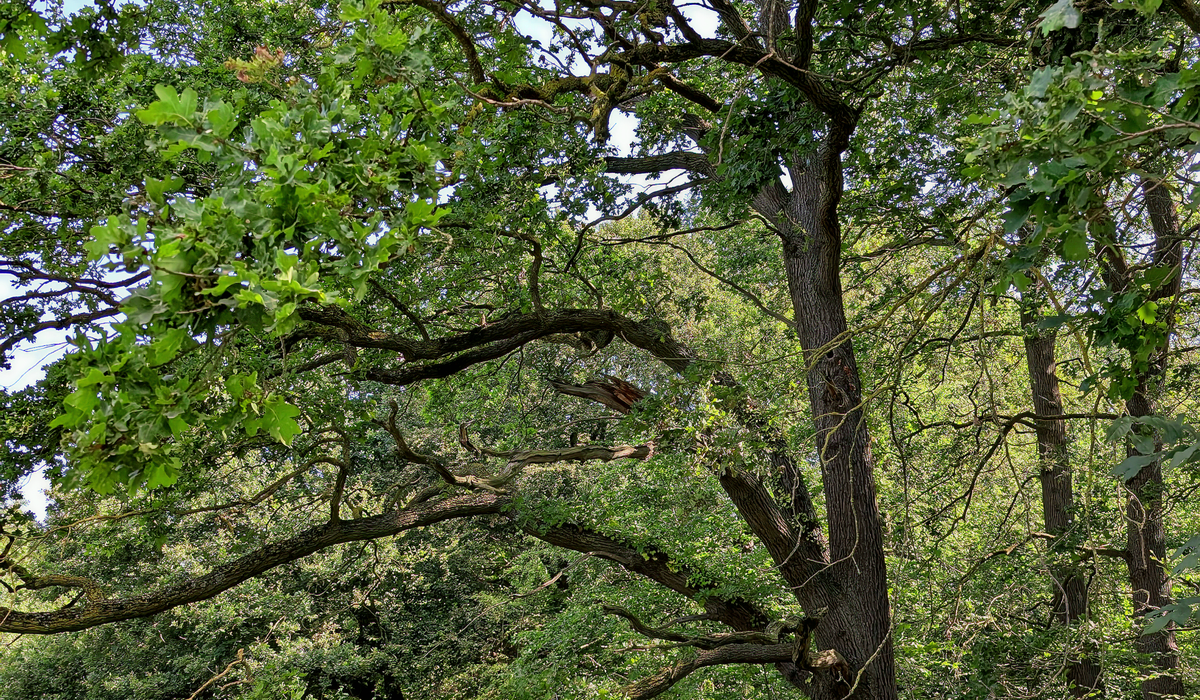
Most garden apples are grown as an open-centred goblet, or "open centre", tree. The idea is a short, clear trunk leading to four or five well-spaced main branches that spread outward, leaving the middle open to sun and wind. Think of a wine glass rather than a closed umbrella.
As your tree matures, keep the following in mind:
- Remove any branch that grows inwards toward the centre of the tree.
- Deal with crossing and rubbing branches, keeping the stronger of the two and taking out the other.
- Take out strong vertical shoots, known as watershoots, that spring straight up from the main branches.
- Thin congested growth so that a blackbird could fly through the branches with room to spare.
- Shorten the previous year's growth on the leaders by about a quarter to a third, always cutting to an outward-facing bud.
Once the framework is set, focus on fruiting spurs — the short, knobbly, stubby growths that carry the blossom. Never prune these away. Keeping a good stock of healthy spurs is what gives you a reliable crop year after year.
Special Cases: Tip-Bearers and Older Trees
Not every apple behaves the same way. Many varieties are spur-bearers, cropping on those short spurs along the branches. But some — including well-known names like Bramley and Discovery — are tip-bearers, producing fruit at the ends of the previous year's shoots. Prune tip-bearers lightly and only to remove dead or crossing wood, or you will simply cut off next year's crop. If in doubt, prune less and watch where the blossom appears.
Neglected, overgrown trees should be tackled over two or three winters rather than all at once. Remove the worst of the dead and diseased wood first, then work on the structure the following year. Drastic single-season pruning shocks old trees and invites a thicket of watershoots.
Common Mistakes and Aftercare
- Pruning too hard. Removing more than a quarter of the canopy at once pushes the tree into leaf and shoot at the expense of fruit.
- Leaving stubs. Untidy stubs die back and create an entrance for canker. Always cut back to a bud or a branch.
- Ignoring canker. Cut affected branches back to clean, healthy wood, and clean your tools afterwards.
- Forgetting the roof. If the tree has grown too tall to pick, lower the leader gradually over a few years rather than lopping it off in one go.
After pruning, clear away all fallen wood from around the base, as it can shelter pests and spores. Give the tree a mulch of well-rotted compost over the root zone, keeping it clear of the trunk. Then step back, admire your open, airy framework, and let the tree do the rest. A little thoughtful work in the cold months pays you back generously in crisp, home-grown apples come autumn.


Tree Care
-
Shape young ornamental trees with correct formative pruning, encouraging strong branch structure and reducing future maintenance needs over time.
Planting



-

Long established fact that a reader will be distracted
-

Long established fact that a reader will be distracted
-

Long established fact that a reader will be distracted




Woodland
Karla Gleichauf
12 May 2017 at 05:28 pm
On the other hand, we denounce with righteous indignation and dislike men who are so beguiled and demoralized by the charms of pleasure of the moment
M Shyamalan
12 May 2017 at 05:28 pm
On the other hand, we denounce with righteous indignation and dislike men who are so beguiled and demoralized by the charms of pleasure of the moment
Liz Montano
12 May 2017 at 05:28 pm
On the other hand, we denounce with righteous indignation and dislike men who are so beguiled and demoralized by the charms of pleasure of the moment